
Europe’s best ski destinations: outstanding slopes, Alpine scenery and well-planned arrivals
A rewarding ski holiday is not defined by the number of kilometres on a piste map. What matters is whether a destination suits the people travelling there. Beginners need manageable slopes, clear progression and straightforward access to lessons. Experienced skiers may be looking for demanding terrain, long descents or a varied day exploring a wider mountain network. When both travel together, the best choice offers enough flexibility for everyone without separating the group for the entire holiday.
The hours away from the slopes matter too: a thoughtful mountain lunch, an appealing village, interesting shops and accommodation that makes daily arrangements easy. Arrival deserves the same attention. A nearby airfield can make a considerable difference, provided the aircraft, weather and operational requirements align. Our selection therefore considers the skiing alongside the character of each destination and the possibilities for landing closer to where the holiday actually begins.
Courchevel: varied skiing with access to Les 3 Vallées
Courchevel is a compelling choice for parties with different levels of skiing experience. Its local area offers approximately 150 kilometres of marked pistes and forms part of Les 3 Vallées, with around 600 kilometres in total. That scale gives confident skiers considerable scope for full-day exploration. It is not, however, a prerequisite for enjoying the destination. There is ample variety within Courchevel itself without making distance the objective of every day.
Beginners benefit from designated learning areas and a choice of green and blue runs. The precise location of the accommodation matters: easy access to suitable teaching terrain can be more useful than a prestigious address beside an unsuitable descent. Experienced skiers have greater scope around Saulire and across the wider linked area. Sensible routes depend on snow, visibility and lift openings, making the official Courchevel piste map a useful part of daily planning.
Away from the slopes, Courchevel 1850 brings together boutiques and an extensive restaurant scene. Le Chabichou is an established culinary address, while popular mountain lunches and evening reservations merit advance planning. Courchevel Altiport, located within the resort, offers an unusually direct arrival. We fly to Courchevel regularly and consider the airfield when selecting the appropriate aircraft. Its mountain setting nevertheless requires careful assessment of weather, runway conditions and operational requirements. A landing cannot be guaranteed regardless of conditions. Depending on the flight, Chambéry or Geneva followed by a ground transfer may provide an alternative.
Megève: gentle progression, Mont Blanc views and village life
Megève particularly suits travellers who see skiing as part of a broader winter stay. Wooded runs, open mountain pastures and views towards the Mont Blanc massif give the area its character. The Évasion Mont-Blanc ski network encompasses more than 400 kilometres of pistes. This is a network-wide figure, rather than a promise that every sector is continuously connected on skis.
Beginners and relaxed recreational skiers should consider suitable terrain within Mont d’Arbois and Rochebrune. Neither sector is uniformly easy, so lessons and accommodation should be matched to actual ability. Intermediate and experienced skiers will find varied terrain for active days on the mountain. Those whose priority is exceptionally long, high-altitude descents may assess Megève differently from travellers seeking attractive, manageable skiing in a varied landscape.
The village is an important part of the appeal. Its historic centre combines boutiques, delicatessens and restaurants with enough character to sustain a holiday that does not revolve entirely around skiing. Flocons de Sel is one of the area’s recognised culinary destinations; opening dates and reservations should be checked for the intended stay. The closest airfield is Megève Altiport. As a specialised mountain airfield, it is not a general-purpose option for every business aircraft. Annecy or Geneva, followed by a road transfer, may therefore be more appropriate for a particular journey.
Kitzbühel: varied terrain with access through St. Johann
Kitzbühel combines an extensive ski offering with a town that remains engaging after the lifts close. KitzSki lists 233 kilometres of descents for the 2026/27 season. Its official winter map is worth consulting, since resorts do not always classify piste kilometres, groomed runs and ski routes in the same way.
Beginners should focus on appropriate nursery slopes and easier sectors. The fame of the Hahnenkamm is not a guide to where someone should spend their first week learning. Experienced skiers have varied terrain to explore and the presence of the Streif, one of Alpine skiing’s most recognisable names. The racecourse is not, however, a blanket recommendation for holiday skiing. Accessible variants, preparation and event-related closures all require consideration.
The landscape differs from the high mountains of the western Alps, with wooded slopes, open pastures and views across the surrounding Tyrolean peaks. The historic town centre offers fashion, specialist sports shops and restaurants within a compact area. Rosi’s Sonnbergstuben is an established option for a meal with a regional character. For arrival, nearby St. Johann in Tirol airfield is particularly relevant. Here, St. Johann refers to the airfield serving the journey to Kitzbühel, not the separate St. Johann ski area. Its suitability depends on the aircraft, conditions and prior coordination. Innsbruck and Salzburg provide alternatives for other aircraft types or travel requirements.
Dolomiti Superski: the Sellaronda, Marmolada and a distinctive mountain landscape
Dolomiti Superski is Nicolas Lohn’s personal favourite in this selection. Its appeal lies in the combination of dramatic rock formations, varied skiing and a distinctive South Tyrolean and Ladin food culture. The lift-pass network covers approximately 1,200 kilometres of pistes, distributed across several ski areas. It is explicitly not a single, fully interconnected piste network. Choosing the right base therefore comes first: Val Gardena, Alta Badia and Arabba provide different access points and suit different priorities.
Beginners will find suitable terrain in selected parts of Alpe di Siusi and Alta Badia. Broad, manageable slopes offer a more sensible introduction than an ambitious touring itinerary. Confident skiers with sufficient stamina can consider the Sellaronda, one of the Alps’ distinctive ski circuits. It crosses four Dolomite passes around the Sella massif. The frequently quoted distance of approximately 40 kilometres includes lift sections; the actual skiing accounts for almost 26 kilometres. That distinction matters: this is not a continuous 40-kilometre downhill run. The Sellaronda requires sensible timing, adequate fitness and attention to the final connecting lifts.
Marmolada offers a different experience. From Punta Rocca at approximately 3,265 metres, the long Bellunese descent leads towards Malga Ciapela. At around 12 kilometres, it is one of the region’s notable long runs. It is particularly relevant to experienced skiers comfortable with sustained descents, a high-mountain environment and changing conditions. Wind, visibility and lift operations deserve particular attention. The Sellaronda and Marmolada should not be squeezed into an already ambitious day simply because they appear close together on a map. The Marmolada cable-car operator provides information for planning access.
Food is another reason to give the itinerary room to breathe. Piz Boè Alpine Lounge is an example of a mountain stop where the setting forms part of the experience. In the villages, specialist sports retailers, regional produce and local crafts add another dimension. Val Gardena’s woodcarving tradition offers something different from an international luxury-shopping destination. That individuality is part of the region’s appeal.
For stays in Val Gardena and Alpe di Siusi, Bolzano Airport is a natural airport to consider. A transfer of a little over an hour can be a reasonable planning allowance for parts of Val Gardena, depending on the hotel, traffic and winter road conditions. The same estimate should not be applied indiscriminately to Alta Badia, Arabba or Marmolada, where journeys can be substantially longer. The official Val Gardena arrival information provides an initial reference. The exact hotel address should nevertheless inform flight planning from the outset, rather than being considered only when arranging the car.
St. Moritz: open landscapes, sporting pistes and life beyond skiing
St. Moritz combines the expansive scenery of the Upper Engadin with an established restaurant and social scene. When choosing suitable skiing, the individual Engadin mountain areas should be considered separately. Corviglia offers approximately 155 kilometres of pistes, providing varied terrain above St. Moritz. This figure refers to Corviglia, not every winter-sports area in the wider Engadin.
Complete beginners may be better served initially by a manageable learning area such as Survih in Samedan than by the largest available mountain. Intermediate and experienced skiers have numerous opportunities for active skiing on Corviglia. The landscape contributes substantially to the experience: the broad valley, lakes and distinctive Engadin light create a different setting from a narrow Alpine valley. The official information on Samedan’s learning slopes is useful when planning for a mixed-ability party.
Paradiso is a recognised mountain address for a longer lunch. Back in town, international boutiques are concentrated partly around Via Serlas. Travellers wishing to combine skiing, dining and shopping will find a varied setting here. The closest airport is Engadin Airport in Samedan. Its proximity to St. Moritz is a considerable advantage, but does not remove the need to assess mountain weather and the applicable operational requirements.
Lech and Zürs: extensive skiing with understated Alpine comfort
Lech and Zürs suit travellers looking for access to a large ski area without losing the feel of a smaller mountain destination. The Ski Arlberg network offers approximately 300 kilometres of ski runs. Additional freeride terrain is a separate category and should not be interpreted as further groomed piste mileage.
Beginners have designated learning areas in Lech, Oberlech and Zürs. For families, accommodation with straightforward access to those areas may matter more than the scale of the wider network. Confident and experienced skiers can explore further afield. The White Ring connects Lech, Zürs, Zug and Oberlech as a well-known ski circuit. Its approximately 22-kilometre itinerary combines descents and lift connections rather than forming a single piste. Current route conditions and individual ability remain decisive.
Dining ranges from regionally rooted inns to accomplished hotel restaurants, including Almhof Schneider. Strolz is an established address for ski equipment and selected fashion. Air access requires a differentiated assessment: Hohenems-Dornbirn is a nearby regional airfield, but its suitability must be established for the particular flight. St. Gallen-Altenrhein, or Innsbruck depending on the route and aircraft, are relevant options for business aviation arrivals. Straight-line distance is less useful than the winter road connection that can actually be used to reach the hotel.
Choosing the right ski destination for your party
For a first shared ski holiday, short journeys between accommodation, lessons and suitable terrain generally matter more than the largest possible piste network. Megève, selected parts of Courchevel, Lech and Zürs, Alta Badia and Alpe di Siusi offer useful starting points. Experienced skiers can place greater emphasis on a particular experience: exploring Les 3 Vallées, completing the Sellaronda, making a long descent on Marmolada or enjoying sporting days on Corviglia.
Travellers seeking a substantial choice of boutiques and restaurants may place greater weight on Courchevel, Megève, Kitzbühel or St. Moritz. Those prioritising mountain scenery and regional culture may find the Dolomites especially appealing. Neither decision can be made sensibly from piste kilometres alone.
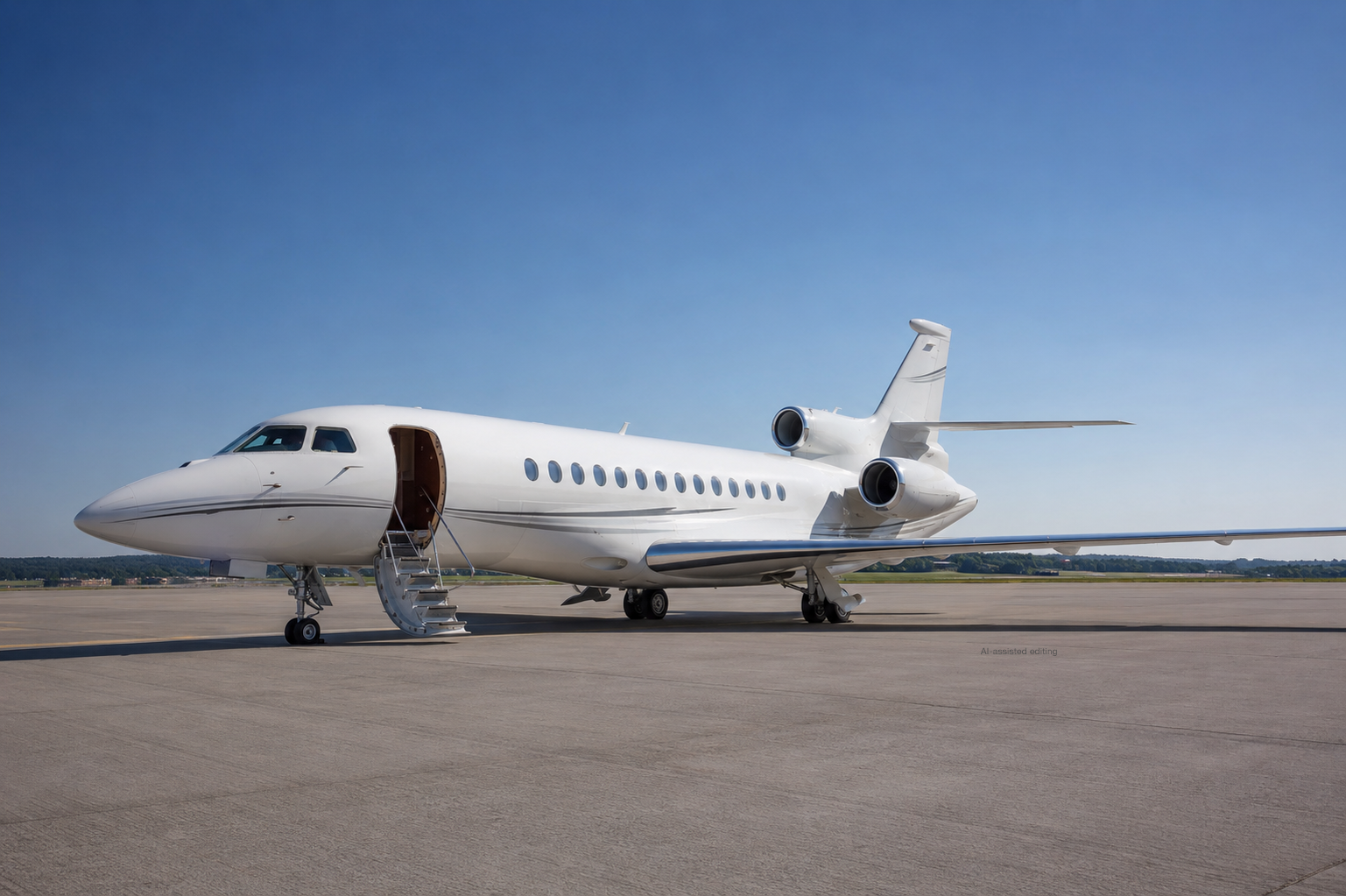
When planning an individual journey, we therefore consider the ski area, accommodation and arrival together. Selecting a private flight involves more than identifying the nearest suitable airfield: passenger numbers, ski equipment, preferred timings and a workable alternative in poor weather all matter. A short transfer is valuable. A properly prepared journey from beginning to end matters more.
Planning and transparency note
Information reviewed in November 2026. Distances are based on published information from the respective operators and tourism organisations. They may describe different categories and should not be understood as a guarantee of open or continuously groomed pistes. Restaurant openings, lift operations, snow conditions and airfield availability must be checked for the intended travel dates. Transfer times are indicative. This selection is an editorial assessment of skiing, surroundings and access, not an objective ranking.
The substance and factual content of this article come from the flying experience of our crew. AI assistance was used in drafting and structuring the text. It was reviewed and approved by our editorial team before publication.