
First Class vs. Private Jet: Which Is Really Better?
First Class elevates a scheduled flight. A private jet changes the journey itself.
Both options promise comfort, personal service and exclusivity, but they solve different problems. A First Class passenger buys the best available seat within an airline’s fixed network. A private charter client gains far greater control over the aircraft, departure time, route and overall travel experience.
In this article, private jet refers to a professionally operated commercial charter flight.
Two different forms of luxury
First Class usually begins at the airport. Depending on the airline and location, the experience may include priority check-in, expedited security processes, lounge access, personal service and an exceptional cabin. On long-haul aircraft, fully enclosed suites, flat beds and individually served dining may be available.
The journey nevertheless remains tied to the airline’s schedule. Departure airport, timing, connections and destination airport are predetermined. First Class passengers also continue to share the terminal, aircraft and travel process with other guests.
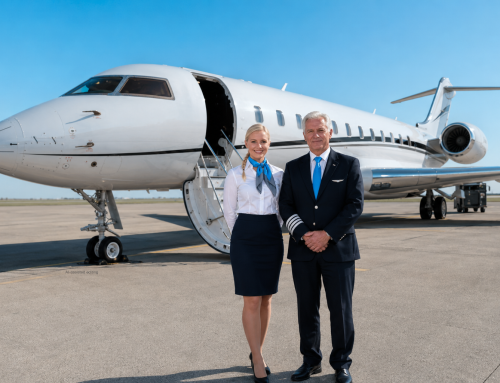
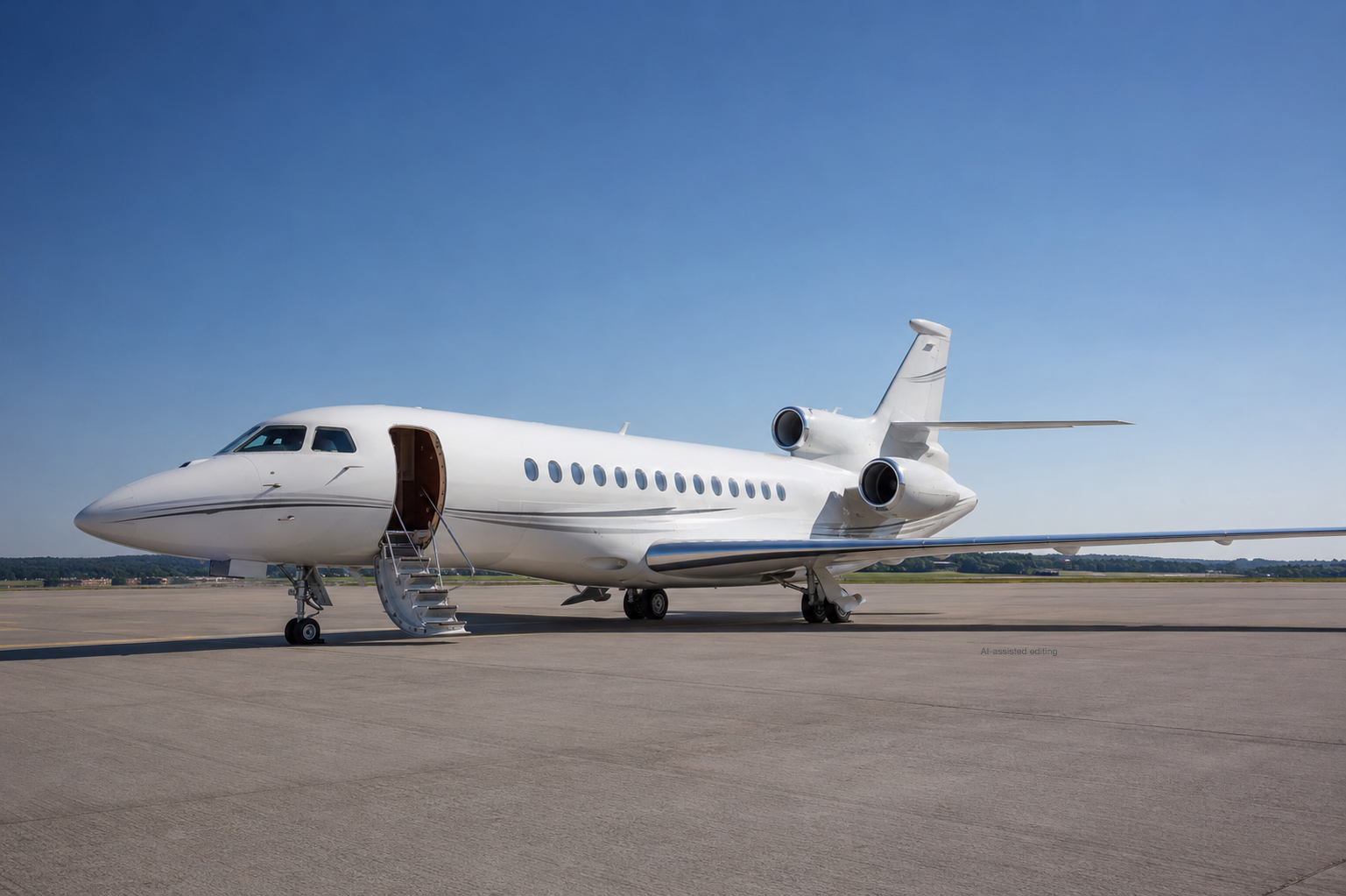
With a private jet, personalisation begins before departure. The airport, schedule, aircraft category, catering, ground transfers and special requests can all be coordinated around the specific mission. The cabin is reserved exclusively for the travelling party.
What is the fundamental difference between First Class and a private jet?
First Class is a premium product within scheduled aviation. A private charter involves booking an entire aircraft for an individually planned mission. The focus therefore shifts from comfort alone to control. Instead of adapting completely to an airline timetable, the journey is designed around the traveller’s requirements, within operational and regulatory limits.
First Class and private jet compared
| Consideration | First Class | Private jet |
|—|—|—|
| Pricing model | Price per seat | Price for the entire aircraft |
| Departure time | Fixed airline schedule | Individually coordinated |
| Airports | Primarily major commercial airports | Access to many smaller and regional airports |
| Connections | Determined by the airline network | More direct routings are often possible |
| Ground process | Standard terminal journey with priority services | Frequently separate facilities and shorter, coordinated processes |
| Privacy | Premium but shared cabin environment | Exclusive use of the cabin |
| Cabin comfort | Potentially very spacious, depending on airline and aircraft | Determined by aircraft size and configuration |
| Baggage and pets | Fixed airline policies | More adaptable, subject to space and payload |
| Flexibility | Rebooking within the airline network | Itinerary can be coordinated around the mission |
| Emissions per passenger | Generally lower, depending on load factor and allocation method | Generally higher, depending on aircraft, route and occupancy |
Private aviation is still affected by weather, air traffic control, airport slots, curfews, immigration requirements, crew duty limits and aircraft availability.
The greatest time advantage is often on the ground
The difference in airborne time can be smaller than expected. On some routes, a commercial airliner may even be faster than a smaller business jet. The relevant measure is therefore the complete door-to-door journey.
A private jet can save time when travellers can use an airport closer to home, avoid lengthy terminal processes, replace a connection with a direct flight or land nearer to their final destination.
This advantage becomes particularly valuable when several meetings must be combined, a team needs to travel together or scheduled services would require an inconvenient connection or overnight stay.
Does a private jet always save time?
No. When a well-timed nonstop service connects two conveniently located major airports, First Class can be highly efficient.
Private aviation is most likely to create a meaningful advantage when scheduled travel involves a long airport lead time, a connection, an overnight stay or a lengthy ground transfer. The real comparison must include the journey to the airport, terminal processes, flight time, connections and onward travel.
How does the cost of First Class compare with private charter?
A First Class ticket is sold per passenger. Its price varies according to airline, route, season, booking date and availability.
A private jet is priced as a complete aircraft mission. The quotation may include the aircraft category, route, positioning sectors, landing and handling charges, crew, overnight costs, de-icing, airport slots, permits and requested services.
When several passengers travel together, the charter price can be divided across the group. This does not automatically make a private jet cheaper than First Class, but it changes the economic calculation.
When does a private jet make financial sense?
There is no credible universal passenger threshold. The answer depends on the route, party size, required aircraft and the commercial value of the time saved.
For one person travelling on a well-served long-haul route, First Class will normally cost considerably less. If a team can travel together, avoid several connections or complete an important trip without an additional overnight stay, the calculation should also include productivity and opportunity cost.
A meaningful decision therefore requires a route-specific quotation and a comparison of the complete journey rather than the airfare alone.
Cabin comfort: bigger is not automatically better
The finest international First Class products can be exceptionally spacious. On selected aircraft, passengers may enjoy a large private suite, a wide bed and an extensive galley service. A First Class suite may therefore provide more personal seating or sleeping space than a light private jet.
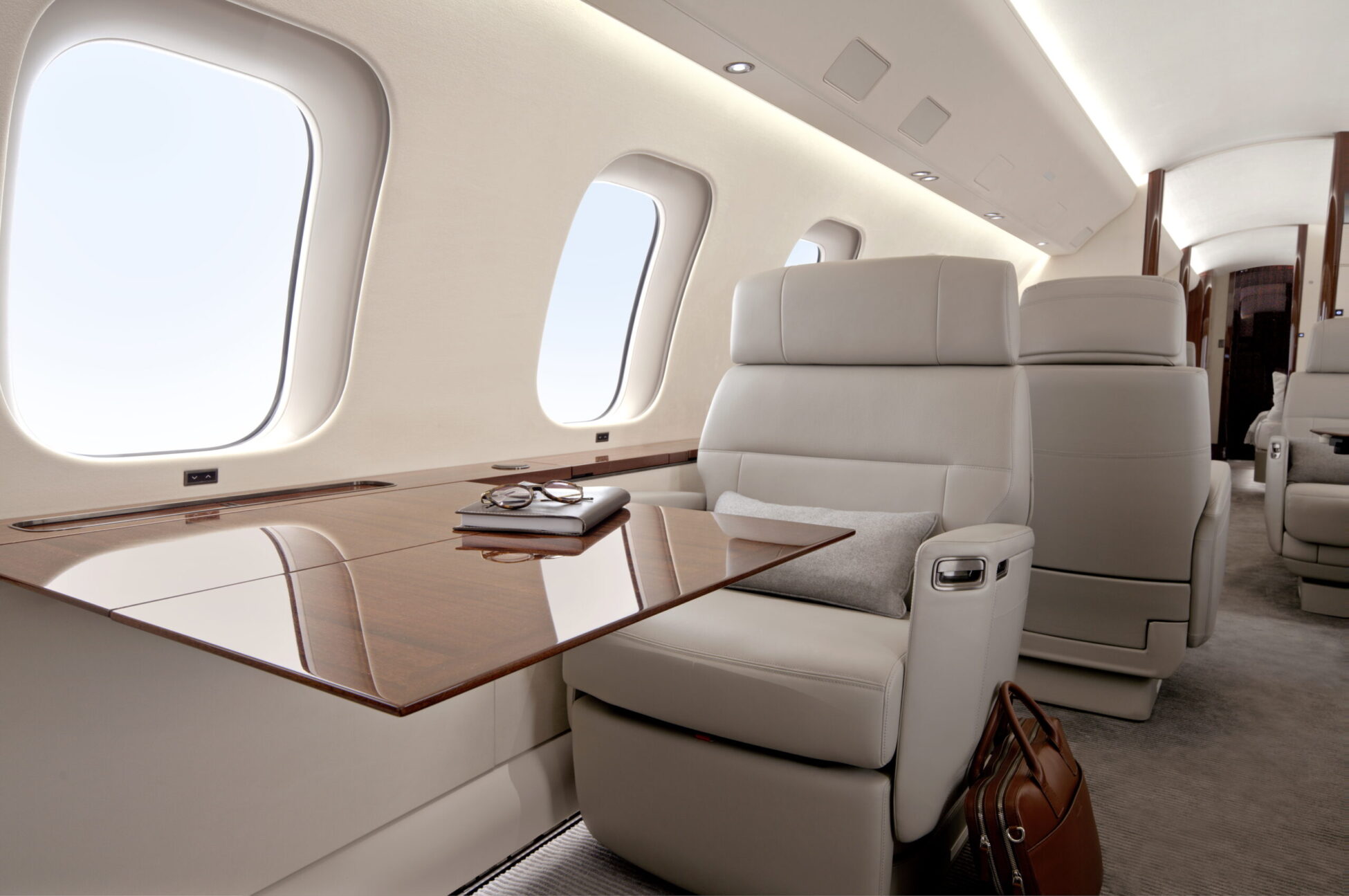
Private aviation offers a different advantage: the entire cabin belongs to one travelling party. Conversations can remain discreet, seating areas can be used freely and the service can be tailored to the passengers. Large-cabin and long-range jets may also provide separate spaces for working, dining and resting.
Can First Class be more luxurious than a private jet?
Yes, if luxury is judged solely by the size of the seat, the bed, dining or individual cabin features, particularly when First Class is being compared with a smaller business jet.
If luxury means choosing the departure time, working without unknown passengers nearby, landing closer to the destination and having the entire journey personally coordinated, private aviation delivers a fundamentally different form of value.
Privacy and productive travel time
First Class provides substantially more personal space than other airline cabins, but a scheduled flight cannot offer complete separation from other passengers.
On a private jet, only the booked party occupies the cabin. Executives can continue a discussion, families can travel in a private environment and exposure in public airport areas can often be reduced. Private does not mean anonymous, however. Security, customs, immigration and documentation requirements continue to apply.
Baggage, pets and special requirements
Private aviation can often accommodate pets, sports equipment, instruments or unusual baggage more flexibly. That flexibility is not unlimited. Door dimensions, baggage compartments, centre-of-gravity requirements and maximum payload vary significantly between aircraft.
Every animal and unusual item should therefore be declared before booking. This allows the aircraft to be selected for the complete mission rather than for range and passenger count alone.
Safety is not determined by aircraft size
Properly operated First Class services and commercial private charters are both part of regulated commercial air transport. As EASA explains, an Air Operator Certificate authorises an operator to conduct specified commercial air transport operations.
When assessing a charter proposal, the operating carrier, approvals, aircraft, maintenance arrangements, crew, insurance and mission planning matter more than an impressive aircraft name.
An honest view of environmental impact
An aircraft used exclusively by a small group will generally use its capacity less efficiently per passenger than a well-occupied scheduled service. The exact comparison depends on aircraft type, occupancy, routing and the emissions-allocation method used.
The European Aviation Environmental Report 2025 identifies more efficient operations, modern aircraft and Sustainable Aviation Fuel as important elements in reducing aviation’s climate impact. Responsible private-flight planning therefore includes:
- selecting an aircraft appropriately sized for the mission
- using the most direct practical routing
- making effective use of the booked cabin capacity
- reducing avoidable positioning flights
- using properly documented sustainable fuel where available
Offsetting can address residual emissions, but it is not a substitute for first avoiding and reducing them.
Which option suits which traveller?
First Class is particularly suitable when:
- a convenient nonstop service is available
- one or two people are travelling
- the airline schedule fits the itinerary
- an exceptional seat and cabin service are the priority
- total price matters more than maximum flexibility
A private jet is particularly suitable when:
- several passengers are travelling together
- departure and return times must be precisely coordinated
- smaller airports can shorten the journey
- connections need to be avoided
- privacy and confidential conversations matter
- pets, special baggage or personalised services are required
- several destinations must be combined within a limited timeframe
Conclusion: The highest luxury is control over your time
First Class and private aviation are not interchangeable versions of the same product. First Class is the most exclusive way to travel on a scheduled airline. A private jet is an individually designed mobility solution.
For some journeys, an excellent First Class connection is clearly the most sensible choice. In other situations, meaningful value only emerges when the timetable adapts to the traveller.
Lohn Aviation therefore considers the complete mission: origin, destination, schedule, number of guests, baggage, preferred comfort and the arrangements before and after the flight. This makes it possible to develop an appropriate and operationally robust solution.
Discover private jet charter with Lohn Aviation or submit an individual flight inquiry.
The substance and factual content of this article come from the flying experience of our crew. AI assistance was used in drafting and structuring the text. It was reviewed and approved by our editorial team before publication.