
Private Jet or Turboprop? Why Choosing the Right Aircraft Makes All the Difference
A faster aircraft does not necessarily produce a shorter journey. If a lengthy transfer follows landing, some of the time saved in the air can be lost on the ground. Choosing between a private jet and a turboprop therefore requires an assessment of the complete journey: from the starting point through the appropriate arrival airport to the hotel, business meeting or holiday home. The right solution depends on range, passenger numbers, luggage, airport access and the reliability of the proposed itinerary.
Nicolas Lohn, founder and Managing Director of Lohn Aviation Group and an active captain, discusses this relationship in his interview with POLO+10, published on 20 October 2026. His observation captures an essential principle of our advice: “But the size of an aircraft tells you nothing about how well it suits a particular journey.” Applying that principle requires a considered assessment, from arranging an individual charter flight to deciding whether to acquire an aircraft.
Journey time begins before take-off and continues after landing
Aircraft comparisons frequently start with cruising speed and cabin size. The actual travel experience also depends on the drive to the departure airport, pre-flight arrangements, potential waiting time, the distance from the aircraft to the waiting vehicle and the onward transfer. On shorter European routes in particular, these stages can account for a substantial part of the overall journey.
A turboprop can therefore provide a more practical connection despite a lower cruising speed if it can use a suitable airfield closer to the destination. On a long intercontinental sector, range, speed and a cabin suited to working and sleeping may take priority. Our private jet charter advice considers these factors together. The relevant measure is the journey an aircraft can deliver under the applicable conditions.
Falcon 8X, PC-24 or PC-12 NGX: Three different mission profiles
Falcon 8X: When range and time on board matter
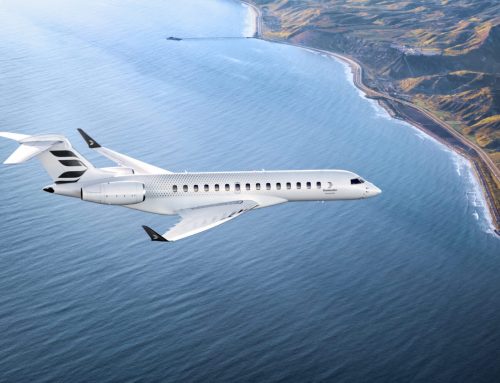
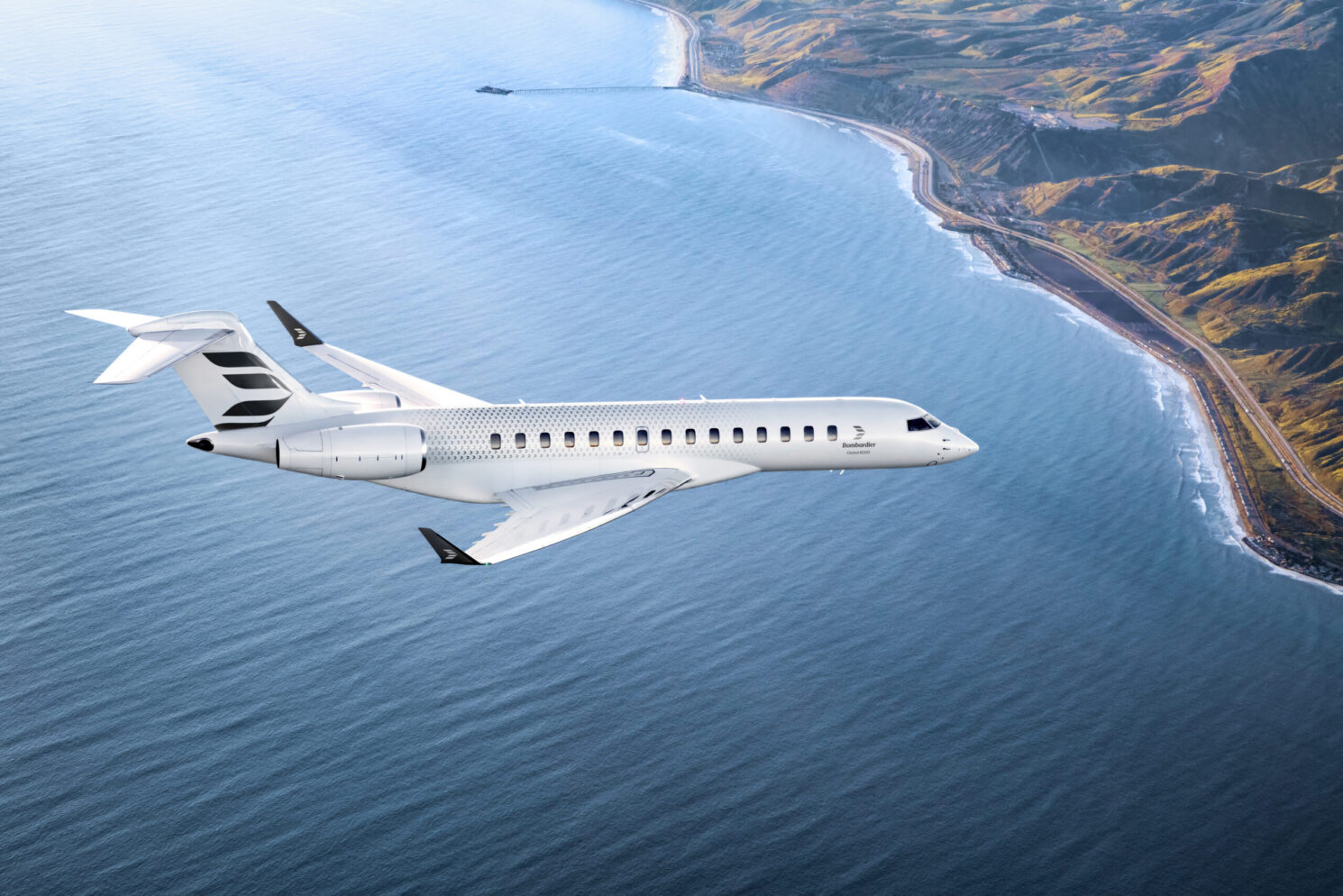
The Dassault Falcon 8X is a long-range jet for journeys combining substantial distances with extended time on board. Dassault publishes a range of up to 6,450 nautical miles under defined conditions. Its official Falcon 8X information explains the performance figures and cabin options. The selection process needs to establish whether long nonstop sectors are a regular requirement and how guests intend to use their time in flight.
Separate cabin areas can make it easier to accommodate meetings, meals and rest within the same journey. These facilities have a practical purpose when travellers intend to proceed directly to appointments after arrival. Published maximum range does not, however, replace an assessment of the actual route, load and weather. A long-range jet must still be evaluated against the intended operation.
Pilatus PC-24: Jet performance with a versatile design
The Pilatus PC-24 is a business jet designed to combine travel performance with access to shorter runways and practical loading. Pilatus describes its large cargo door and suitability for different runway surfaces in the official PC-24 overview. These characteristics can be relevant when several people regularly travel with substantial or bulky luggage and a jet is preferred.
They do not establish blanket suitability for every small airfield. Runway length, obstacles, loading, surface condition and the requirements of the specific operation must all be compatible. The PC-24 can therefore address a useful combination of travel requirements without replacing every capability of a smaller turboprop or a large long-range jet.
Pilatus PC-12 NGX and PRO: When destination access changes the decision
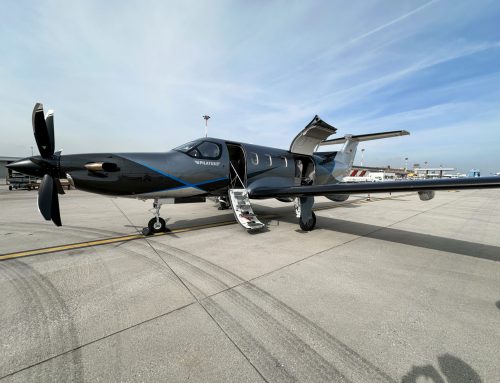
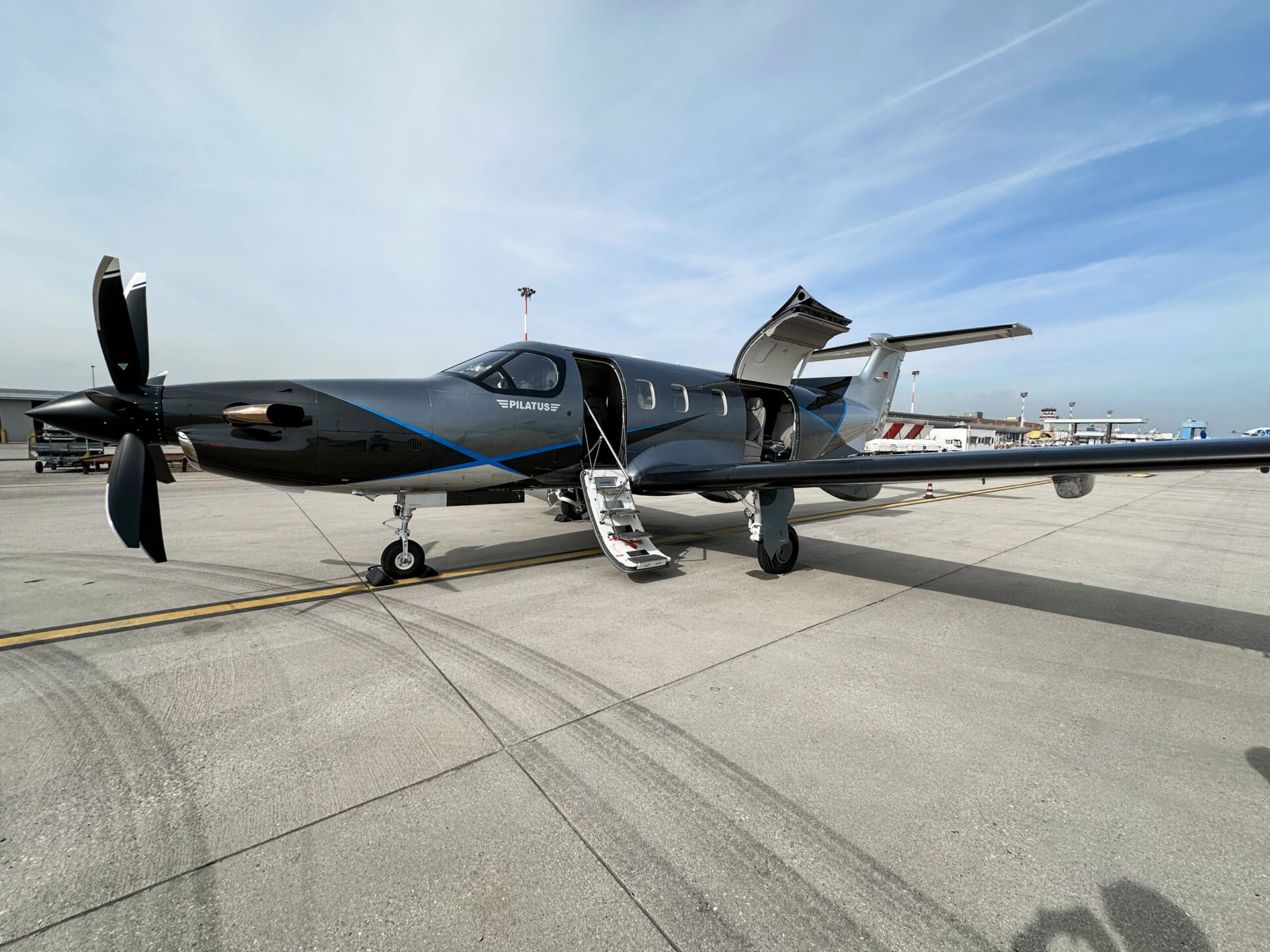
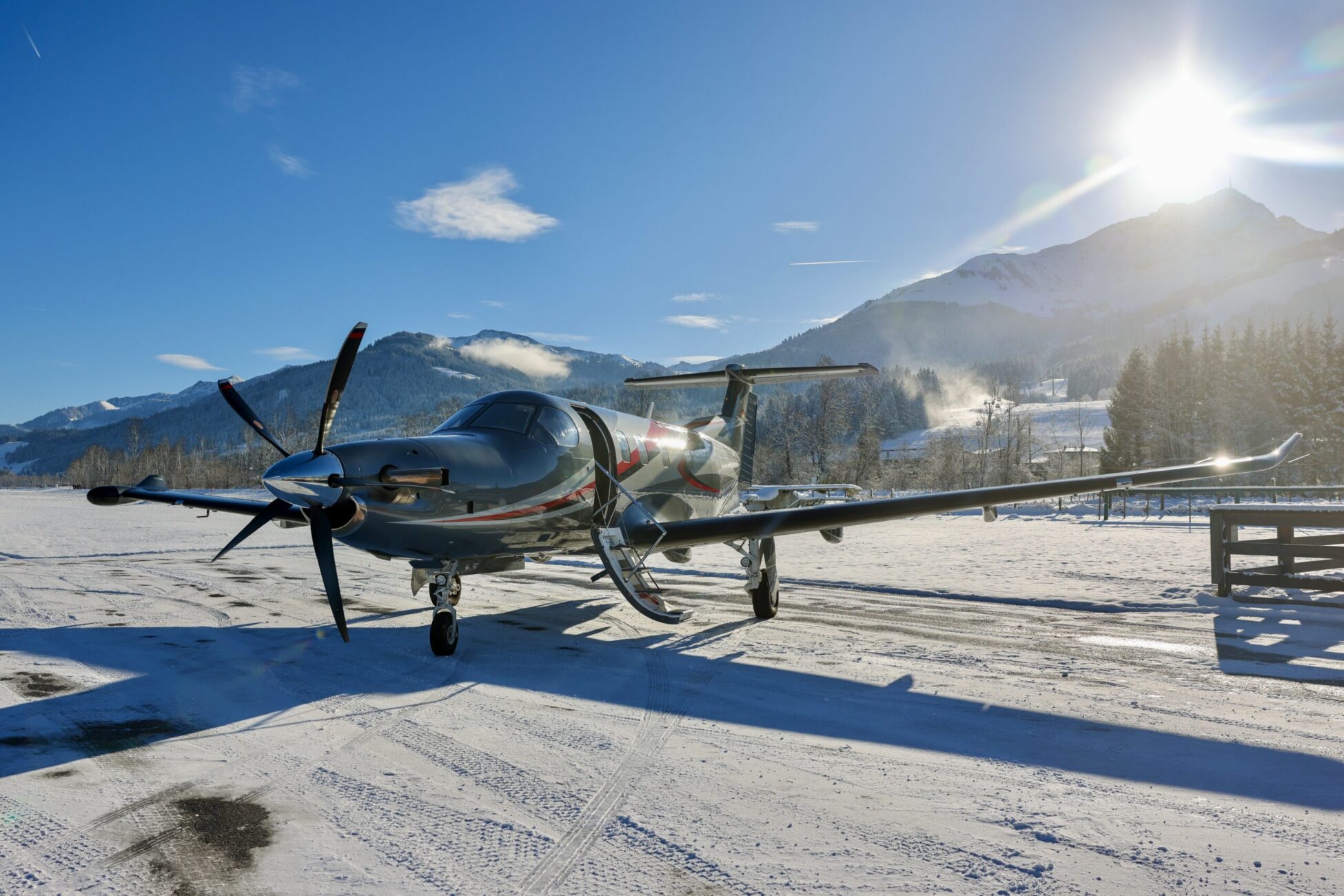
The PC-12 NGX and PC-12 PRO are turboprop aircraft. Propeller propulsion distinguishes them technically from jets, but says little on its own about their value for an individual journey. On regional routes, access to suitable smaller airfields, the cabin and practical baggage loading can be particularly relevant. A meaningful assessment considers both the weight and dimensions of the items being carried.
For an Alpine weekend or a journey with a suitable small airfield nearby, a PC-12 may fit the requirement well. A long sector with demanding speed and cabin requirements may favour a different aircraft. Sound selection therefore considers both the strengths and limitations of each category.
Three destinations demonstrate the importance of the arrival airport
St. Johann in Tirol: A possible arrival closer to Kitzbühel
For travel to the Kitzbühel region, St. Johann in Tirol airfield, ICAO code LOIJ, merits consideration. The operator publishes a runway length of 750 metres and expressly identifies prior permission, local procedures and time restrictions. These are documented in the official arrival and departure information. With a suitable aircraft, St. Johann can provide an alternative to landing at a larger airport followed by a longer road transfer.
The benefit needs to be assessed against the actual accommodation and conditions on the day. A closer arrival is particularly useful when it simplifies the overall itinerary. At the same time, the short runway and Alpine setting require careful operational assessment. General technical suitability does not establish that a particular flight can be conducted.
Venice-Lido: Planning the onward journey across the lagoon
Giovanni Nicelli Airport on the Lido provides a different approach to Venice from Marco Polo International Airport. Its position on the northern part of the Lido and its water connections are described by the airport operator, Aeroporto Nicelli. For an appropriate itinerary, arrival can be coordinated with a prearranged water taxi and onward travel to the accommodation.
The precise destination determines the benefit. A stay on the Lido involves different considerations from a hotel in the historic centre or a mainland appointment. Airport suitability, opening hours and the necessary handling arrangements must also be established beforehand. Airport selection and the onward transfer therefore belong within the same planning process.
Courchevel: Direct access to the ski resort with particular requirements
Courchevel demonstrates especially clearly how an airfield can influence aircraft selection. Altiport LFLJ sits at approximately 2,000 metres above sea level within the ski resort and has a steeply sloping, 537-metre runway. The local characteristics are published by the Courchevel Altiport operator. For suitable flights, direct arrival can substantially shorten the final stage of the journey.
The short runway, terrain and weather dependence require an appropriate aircraft, suitably qualified crews and an individual operational assessment. A model’s general short-field capabilities do not automatically establish that it can operate into Courchevel. Preparation also needs to include an alternative should a direct landing be unavailable on the day.
Smaller airfields offer advantages that require careful assessment
At smaller airfields, short walking distances and straightforward arrangements can make travel easier. Where local rules permit, the onward transfer may begin directly beside the aircraft. Larger airports also have General Aviation Terminals or equivalent facilities for private flights. The meaningful comparison therefore concerns the actual arrangements at each location.
A small airfield is not automatically available without restrictions. Prior permission, opening hours, weather, handling and entry formalities can all affect the itinerary. Under some circumstances, a larger airport may provide the more reliable solution. Good advice explains these differences before booking and supports a decision appropriate to the journey.
Charter, purchase or leasing: When should the options be compared?
In the POLO+10 interview, Nicolas Lohn identifies approximately 100 to 200 annual flight hours, depending on aircraft type, as a reason to examine different ownership and usage models more closely. This is not a universal financial break-even point. Two travellers with identical annual hours may reach different conclusions because their routes, scheduling flexibility and availability requirements differ.
Aircraft ownership may be attractive where a recurring mission profile combines with a preference for a dedicated cabin and demanding personal availability requirements. Charter allows the aircraft category to change from one journey to another. Someone travelling mainly within Europe with occasional intercontinental requirements does not necessarily need one owned aircraft to cover every mission.
Financing and leasing also change the financial assessment. Initial payments, recurring commitments, maintenance obligations, contract duration and eventual sale or return conditions need to be evaluated together. The relevant perspective covers several years of cash flow, expenditure and risk. A low monthly payment or an attractive purchase price alone does not identify the appropriate model.
Aircraft management connects the purchase decision with everyday operation
Before acquisition, aircraft selection should be aligned with the intended operation. This includes the base, crew arrangements, maintenance planning, technical oversight and provisions for periods of reduced availability. Any proposed charter activity must also fit the owner’s use. Additional charter flights may contribute towards expenditure, while generating costs of their own and affecting aircraft availability.
Individual aircraft management brings these relationships together. Before purchase, there should be a clear understanding of how the aircraft will be used, which expenses are expected and how changing travel habits could affect the operation. Aircraft selection then becomes part of a workable operating plan.
Personal service requires an understanding of the complete journey
In the interview, Nicolas Lohn describes the personal relationship with guests as fundamental to the company’s approach. In practice, this means understanding recurring requirements and considering them early: luggage, preferred departure airports, the needs of accompanying children and whether arrival will be followed by rest or an immediate appointment.
Lohn Aviation’s travel and concierge service can also include hotels, villas, yachts, restaurants and transfers on request. Its value comes from coordinating those elements. Suitable accommodation and a well-planned transfer can matter as much to a stay as the aircraft cabin. Aircraft selection consequently becomes a decision about the quality of the entire journey.
The POLO+10 interview
The complete POLO+10 interview with Nicolas Lohn explores his personal perspective as a founder, Managing Director and active captain. This Insights article develops those themes through practical criteria for aircraft selection, airport access and ownership models.
The operating possibilities described do not constitute confirmation that a particular flight can be conducted. Actual availability, the suitability of the specific aircraft and crew, weather, loading and local operating conditions remain decisive. An individual journey or ownership decision requires the corresponding assessment.
The substance and factual content of this article come from the flying experience of our crew. AI assistance was used in drafting and structuring the text. It was reviewed and approved by our editorial team before publication.