
Buying and Operating a PC-24: From the Initial Idea to a Planned Resale
Aircraft acquisition is most effective when the aircraft itself has not yet been chosen. Our current PC-24 mandate began at precisely that stage: the client was considering aircraft ownership and wanted to understand whether the purchase could also make sense from an investment perspective. This allowed us to assess the essential decisions together from the outset. Personal utility, capital commitment, operating costs and a potential future sale were considered as parts of the same ownership decision. This article explains the selection of the Pilatus PC-24 and the operating budget for the first year, 2026.
At the outset, ownership itself had to make sense
The initial discussions examined both the advantages and the responsibilities of owning an aircraft. Availability, a familiar crew and control over travel arrangements can create substantial personal value. These benefits come with recurring expenditure, maintenance downtime, organisational responsibilities and exposure to changes in aircraft value. Costs continue during periods of limited flying. Financing reduces the initial equity requirement, while introducing interest expense and contractual commitments.
A relatively short ownership period was also envisaged for this mandate. A potential sale after two to three years therefore needed to inform the purchase decision. The owner aims to preserve as much of the capital committed as possible, with a potential resale gain viewed as an additional opportunity. This expectation was kept distinct from the overall economics: selling an aircraft above its purchase price does not, by itself, mean that ownership has generated a profit once operating, financing and transaction costs are included.
Aircraft selection started with the actual journeys
The principal basis for our aircraft selection and acquisition advice was the client’s mission profile. Regular routes were assessed separately from journeys undertaken only once a quarter. Typical passenger numbers, required payload and the nature of the luggage were equally relevant. Weight alone does not fully describe a transport requirement. Bulky items can be as significant to aircraft suitability as the available payload allowance.
In this case, the core requirement is for journeys of approximately 500 nautical miles, usually carrying three to five passengers. Frequently used airfields and the practicalities of accessing them were also considered. An aircraft needs to serve the regular missions reliably, with sufficient flexibility for occasional variations. Infrequent requirements may justify a different travel solution without determining the size and capabilities of the owned aircraft for every journey.
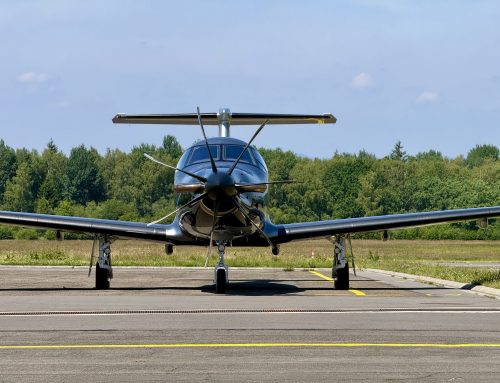
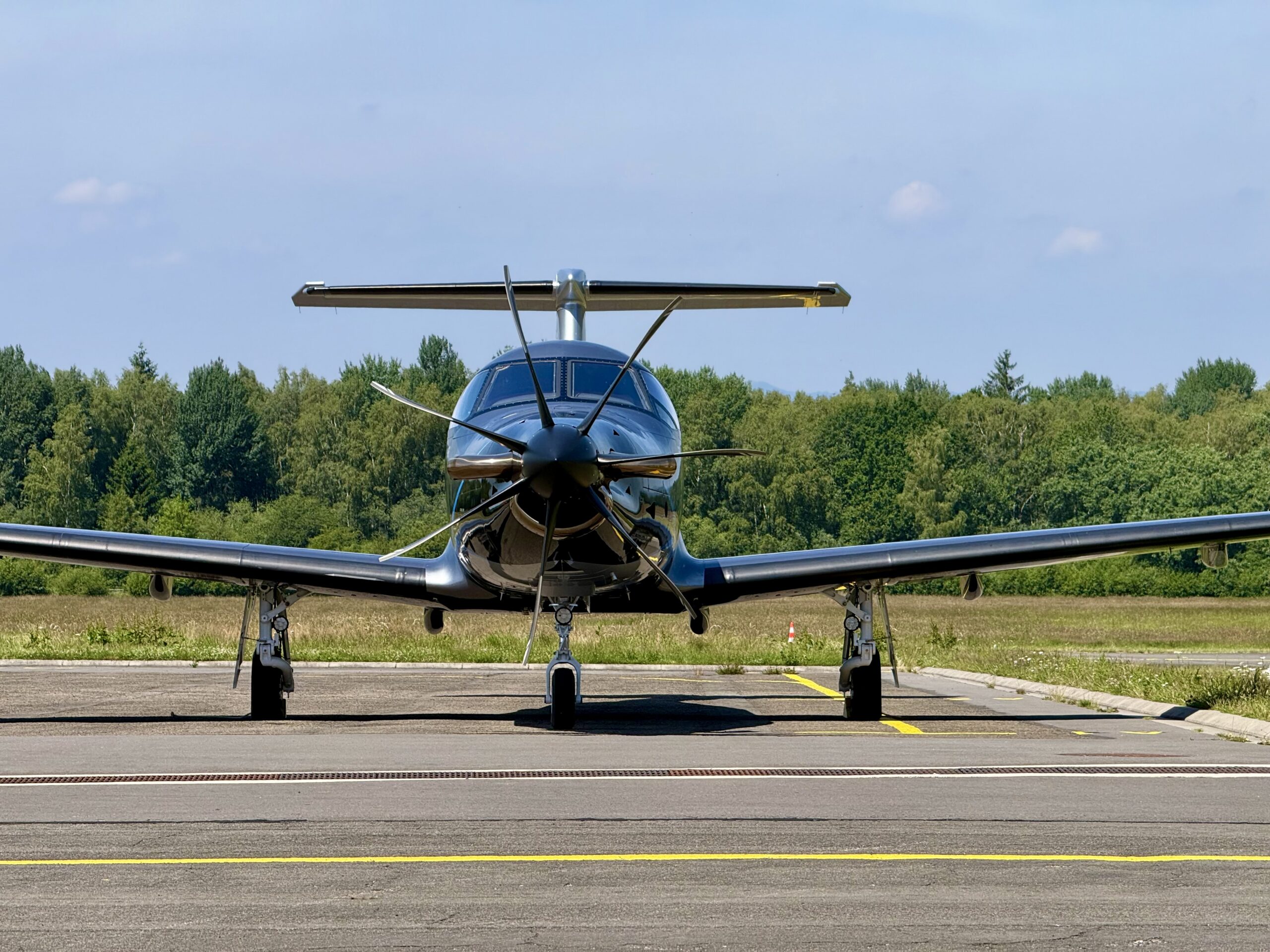
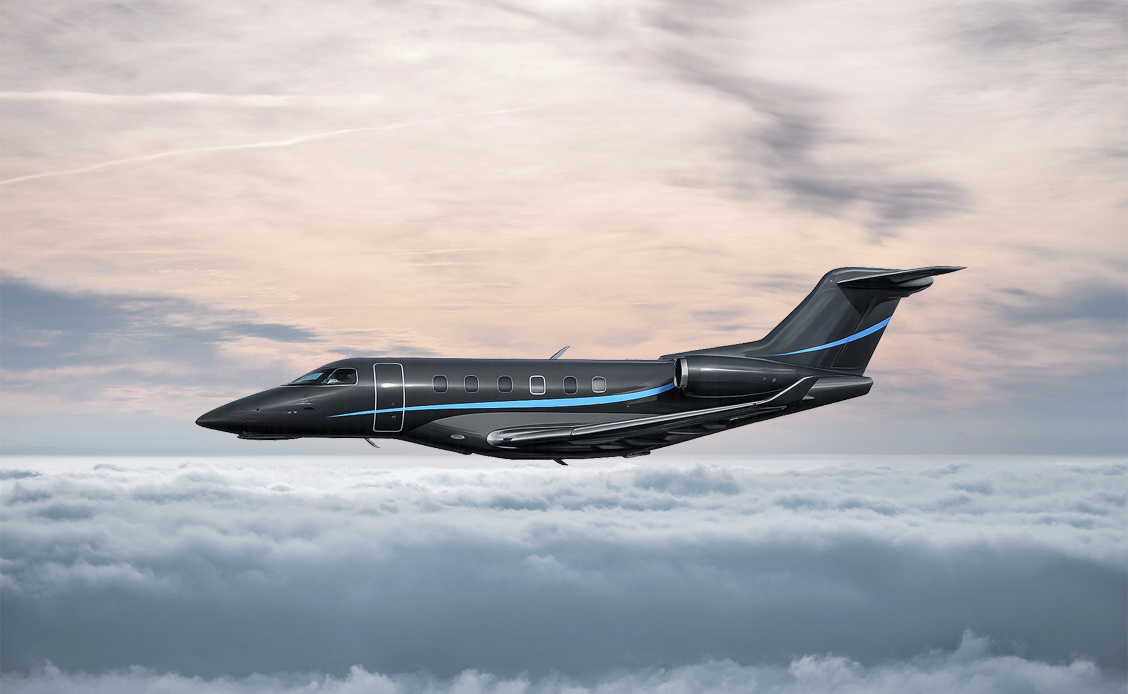
Following extensive consideration, the Pilatus PC-24 was identified as the appropriate aircraft for this mandate. Its cabin, large cargo door and shorter-runway capabilities were relevant features in the selection process. Pilatus outlines these characteristics in its official PC-24 overview. Whether a specific airfield can be used with a particular load still requires assessment of the operating conditions and applicable performance calculations. Average route length alone would not have been sufficient to justify the choice.
Purchase price and financing: separating capital from expense
The PC-24 was acquired for USD 14.6 million. The financing plan provides for a 30 per cent down payment and an interest rate of 4.5 per cent. Applied to the purchase price, this represents an initial equity contribution of USD 4.38 million and a calculated financing requirement of USD 10.22 million.
The down payment is a capital commitment and should not be treated as an annual operating expense. Principal repayments and interest must also be considered separately: repayments reduce the outstanding liability, while interest represents the cost of financing. A reliable cash flow forecast must additionally account for payment dates, the repayment schedule and any applicable fees. As the acquisition price is expressed in US dollars and the operating budgets below are stated in euros, the amounts are not combined without a defined exchange rate.
The operating budget for 2026
Annual budgets have been established for insurance, operational management and crew. The planned combined premium for hull and liability insurance is EUR 35,000. The liability cover has a Combined Single Limit, or CSL, of EUR 30 million. Aircraft management, continuing airworthiness management through the CAMO and inclusion in the AOC operation are budgeted at a combined EUR 90,000.
Two pilots have been recruited for this PC-24. Their combined annual budget is EUR 265,000, including the planned Operator Proficiency Checks and Licence Proficiency Checks, known as OPC and LPC. A dedicated crew is therefore a central element of the operating model and the largest individual annual budget item presented here. Hangarage is budgeted at EUR 20,000, with a further EUR 8,400 allocated to databases, Jeppesen charts and related navigation information. Under the current plan, CPDLC, AFIS and weather services incur no additional charges in the first year. This should not be interpreted as a general absence of charges for these services or an assumption that subsequent years will be identical.
Scheduled and unscheduled maintenance are budgeted at a combined EUR 95,000, including a deliberate contingency allowance. This is a planning provision rather than an established maintenance bill. Together, the annual budget items listed above amount to EUR 513,400. This total does not yet include the direct operating costs described below, financing or all other mission-specific expenditure. It therefore does not represent the complete annual cost of owning a PC-24.
Direct operating costs: EUR 1,700 per flight hour as a planning assumption
Direct operating costs are indicatively budgeted at EUR 1,700 per flight hour, including the TAP Blue Engine Program. This figure supports planning; it is not a fixed price applicable to every flight. Fuel prices in particular can vary substantially between purchasing locations. The actual mission profile also influences how closely operating expenditure follows the hourly assumption.
Direct operating costs must be distinguished from the full cost of ownership per flight hour. Crew, hangarage, insurance, management and financing need to be considered in addition. Airport, handling and route charges must also be assessed against the specific missions and the scope of the calculation. When consolidating the annual budget, care is required to avoid counting maintenance expenditure and engine programme coverage twice. Without a defined annual flight-hour assumption, the figures presented here cannot establish a reliable overall cost per hour.
Limited charter activity as a deliberate ownership choice
The aircraft is also used for charter, but on a deliberately limited basis. Additional utilisation is intended to contribute towards recurring expenditure while keeping total flight hours moderate ahead of the planned resale. This is an individual decision within the aircraft management strategy, shaped by the intended ownership period and this owner’s priorities.
Charter revenue does not translate into an economic contribution of the same amount. Additional flights incur direct costs and may involve positioning sectors, further flight cycles and additional maintenance exposure. Conversely, low flight hours do not guarantee a particular resale price. The appropriate level of charter activity depends on the relationship between incremental net contribution, utilisation and potential implications for the eventual sale.
The future sale informs today’s decisions
The envisaged sale after two to three years gives the acquisition and operation a clear time horizon. A well-maintained aircraft with a traceable technical history and moderate utilisation can be attractive to prospective buyers. The price ultimately achieved will also depend on market conditions at the time, competing aircraft available for sale, maintenance status and the terms of the transaction.
A potential resale price above USD 14.6 million therefore remains a scenario rather than an assured outcome. The owner’s overall expenditure across the ownership period must account for operating costs, financing, net charter contributions and the eventual sale. The personal value of the journeys undertaken also belongs in the ownership decision, but it should not be equated with a resale profit.
Transparency statement
This article describes a specific, current Lohn Aviation mandate. The purchase price, financing parameters and operating budgets reflect the individual plan for the first operating year, 2026. The operating figures are not final actual costs or a general price list for the Pilatus PC-24. Costs can differ substantially between regions, bases and owners. Mission profile, flight hours, flight cycles, crew arrangements, insurance cover, maintenance requirements and fuel purchasing all materially influence the outcome. To protect confidentiality, the owner, aircraft base, registration and identifying equipment details are not disclosed. A meaningful calculation for another owner requires an individual assessment of the proposed operation.
The substance and factual content of this article come from the flying experience of our crew. AI assistance was used in drafting and structuring the text. It was reviewed and approved by our editorial team before publication.