
A Private Flight to Viterbo: Ice Cubes by Taxi and a Trip Far from Routine
The catering for our private flight to Viterbo came from a restaurant in town. A taxi brought the food, drinks and even the ice cubes to the aircraft. There was no specialist flight caterer or handling agent to take care of it for this trip. Finding a taxi in the first place proved more difficult than expected. By the time our guests reached the aircraft, everything was ready.
Nicolas Lohn flew the trip himself and shared the story on LinkedIn. One of the most consequential decisions had already been made before the outbound flight: we carried the fuel needed for the onward journey in the aircraft’s tanks, allowing us to leave Viterbo without refuelling there. The trip illustrates how closely aircraft selection, flight planning and personal service are connected at a destination with limited business aviation infrastructure.
Why we chose not to refuel in Viterbo
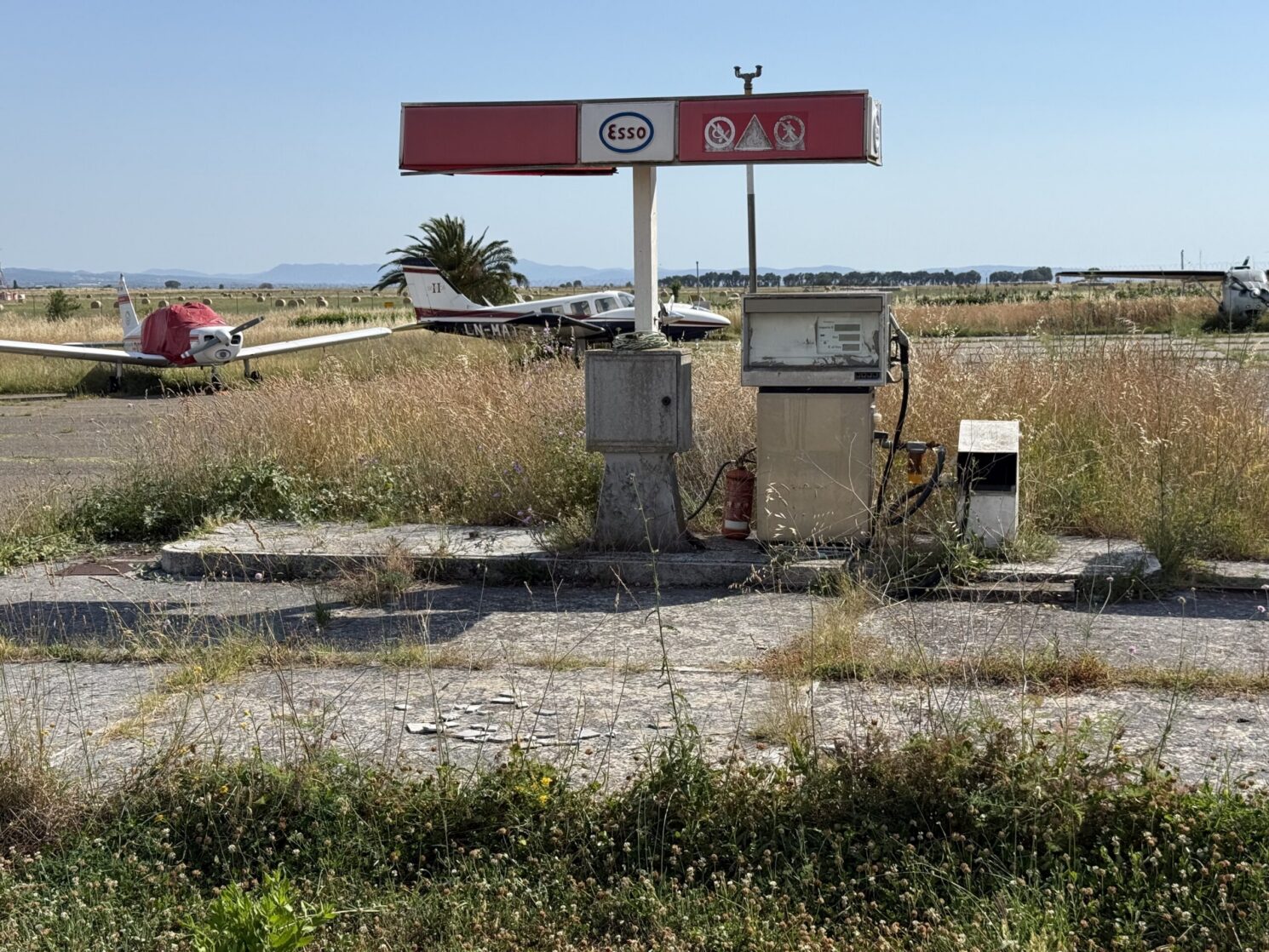
Fuel was available in Viterbo. After seeing the infrastructure, Nicolas Lohn decided that he would prefer not to make the onward journey dependent on refuelling there. That was a judgement about this trip, not a statement about the quality of the fuel available at the airfield. Bringing our own fuel meant departing with enough fuel in the aircraft’s tanks. No separate fuel supply was carried as cargo.
That removed a dependency at the destination and made planning the outbound leg more demanding. Carrying fuel for the onward flight changes the aircraft’s mass at departure and arrival on the first leg. The extra fuel must be considered alongside the passengers, baggage and actual load distribution. Take-off mass and centre of gravity must remain within the applicable limits. The expected landing mass at Viterbo and the subsequent departure with the remaining fuel belong in the same assessment. EASA’s guidance on mass and balance sets out the figures considered in load planning and documentation.
Maximum take-off weight is only part of the calculation
Maximum take-off weight, or MTOW, is a structural limit. The permitted mass for a particular departure may be lower if the available runway, temperature or obstacles limit take-off performance. The centre of gravity is a separate consideration: an aircraft can be within its weight limits and still be loaded outside the permitted balance limits. What matters is how much mass is on board, where it is distributed and how fuel burn affects mass and balance during the flight.
For Viterbo, the task was to reconcile the fuel needed for the onward journey, including the required reserves, with those limits. Simply filling the tanks is not a substitute for that assessment. If the figures do not work for the aircraft, load and airfields involved, the itinerary has to change. A suitable fuel stop or a different arrival airfield may be the better choice.
Catering without a handling agent: From the restaurant to the aircraft door
At an airport set up for private flights, a handling agent will often coordinate between the suppliers, airport and crew. In Viterbo we had to make that connection ourselves. A local restaurant prepared the food. Drinks and ice were sourced in town as well, and a taxi brought everything to the aircraft. The challenge was to get each step to happen in the right order so that the catering was ready when the guests arrived.
The ice cubes are a good example of what personal service involves. They are a small item on an order, but without an airport supplier someone has to work out where to get them, how to transport them and when they need to reach the aircraft. Our guests should not have to think about any of that. For them, the service was having everything ready when they arrived. For us, it meant taking responsibility for the individual steps. The same approach informs our private travel and concierge service.
Unconventional destinations and grass runways: When a small airfield makes sense
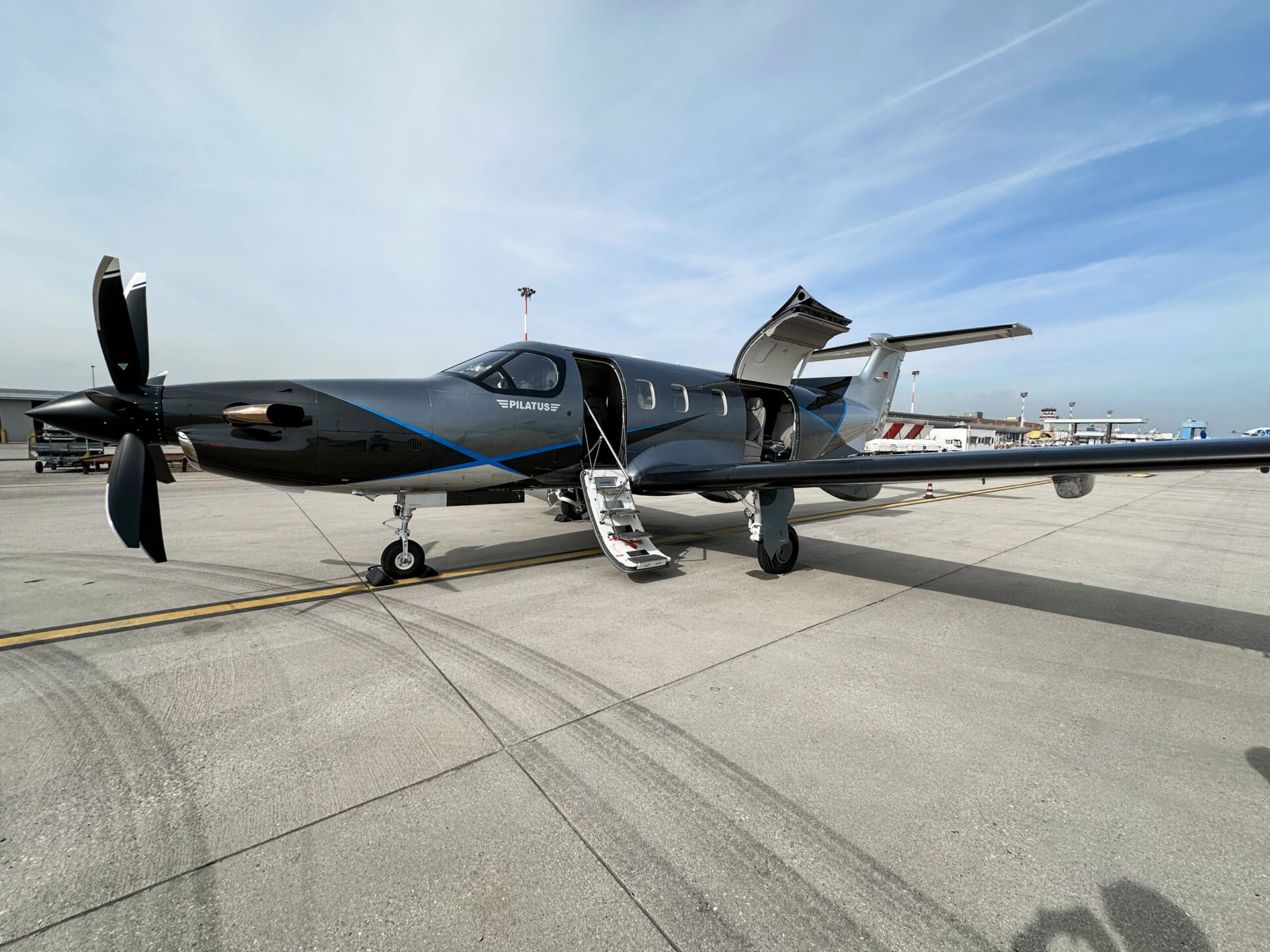
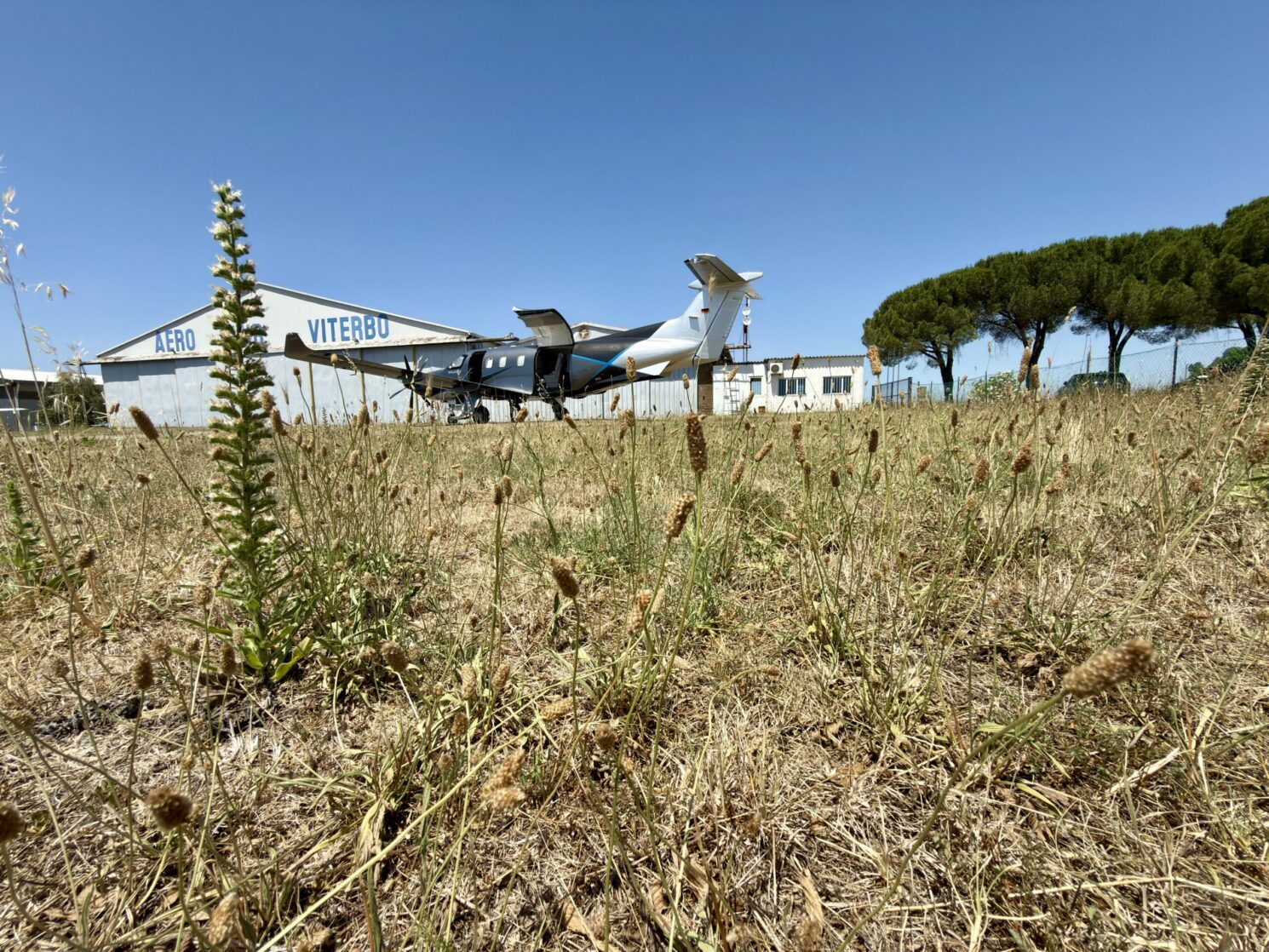
An airfield with limited infrastructure can still be the right arrival point if it brings guests closer to where they are going or avoids an awkward transfer. When planning private flights, we consider suitable airfields beyond the usual business aviation airports. That can include grass runways. The Pilatus PC-24, for example, is a business jet designed by its manufacturer to operate on certain unpaved surfaces. It illustrates the broader aircraft selection question; it does not identify the aircraft or runway used for the Viterbo flight.
Whether a grass runway is suitable for a particular trip depends on the aircraft, its documented performance and the applicable operating requirements. Available runway length, surface condition, weather and loading also matter. Aircraft choice and fuel planning are closely connected here: if the aircraft is to continue without refuelling, it must also be able to depart from that airfield with the fuel still on board. Landing closer is worthwhile only if the entire itinerary, including the onward flight, can be planned on sound operational grounds.
Viterbo shows what a private flight can offer away from the usual infrastructure. We used the destination our guests wanted without making the onward journey dependent on local refuelling. Their catering was ready even though there was no specialist supplier at the airfield. The journey stayed straightforward for the guests because we treated the aircraft’s operating limits and the details on the ground as parts of the same job.
The substance and factual content of this article come from the flying experience of our crew. AI assistance was used in drafting and structuring the text. It was reviewed and approved by our editorial team before publication.