
Three Years of Operating a Phenom 300E in Europe
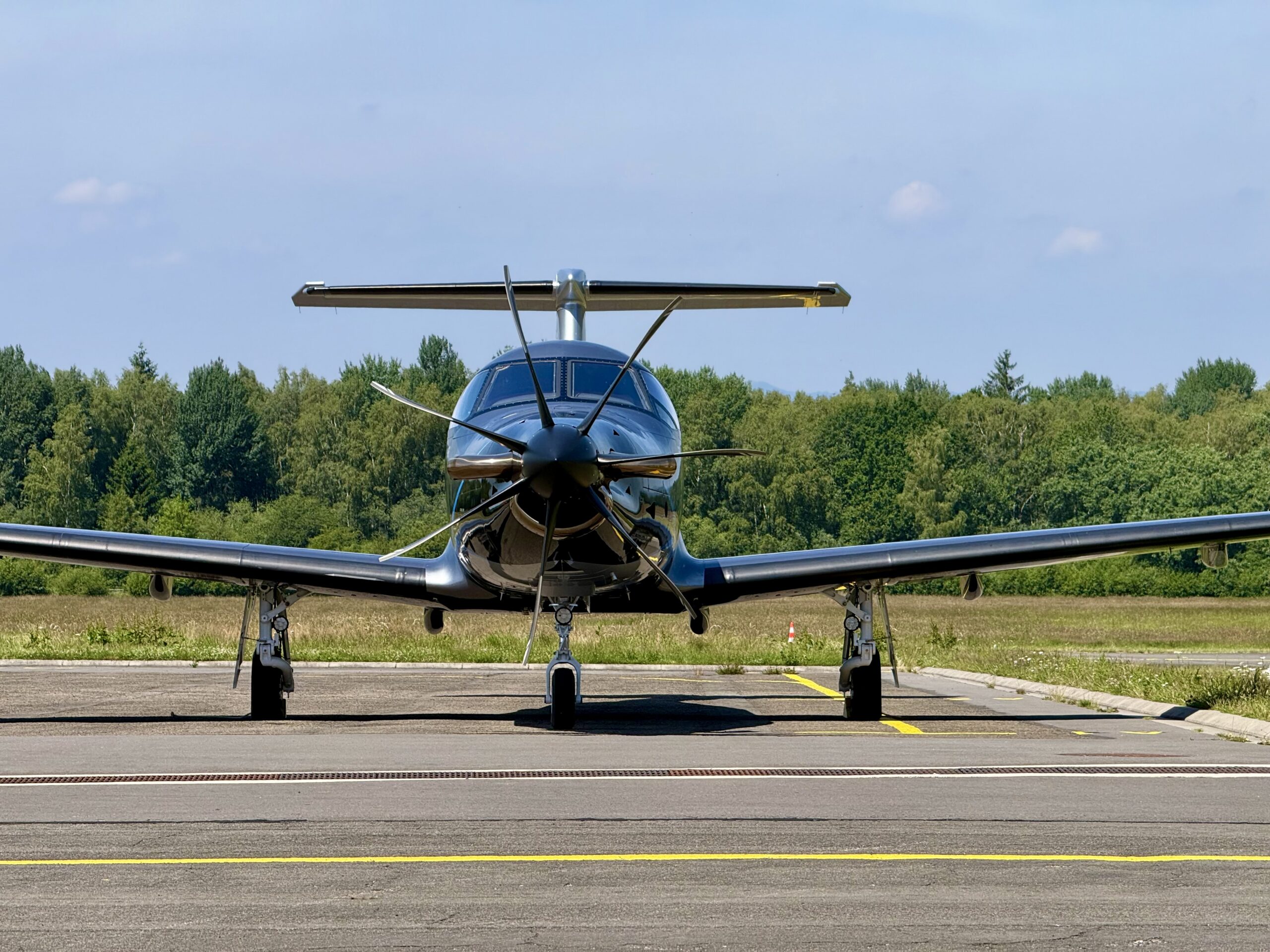
This analysis reviews the first three years of operating a specific Phenom 300E in Europe. The aircraft was sold at the end of the period under review. Rather than presenting theoretical market estimates, the article examines the operating cost structure and the practical experience gained from this particular aircraft. The figures reflect the cost and contractual environment at the end of 2022. They should therefore be understood as a historical operating reference, not as a current quotation for operating a Phenom 300E.
For comparability, the costs have been normalised to approximately 400 flight hours per year, equivalent to 1,200 flight hours over three years. Actual costs naturally varied between individual months and missions due to factors such as route profiles, fuel prices, technical events and the number of flight cycles. A consolidated review over an extended period is therefore more meaningful than any single monthly invoice.
Transparency and scope of the data
For reasons of discretion, we do not disclose the aircraft’s precise location, registration, ownership structure or frequently operated routes. The aircraft was based in Europe and operated predominantly within the European aviation environment. The figures have been consolidated in a manner that prevents conclusions being drawn about individual journeys, passengers or the owner.
Every aircraft and operating profile is different. Even two technically comparable Phenom 300Es can generate significantly different annual costs. Home base, hangar arrangements, crew structure, insurance profile, annual utilisation, average sector length, flight cycles, maintenance programs and operational requirements all have a material influence on the result. The following figures therefore describe the operating perspective of this particular aircraft and should not be transferred to another Phenom 300E without adjustment.
Operating costs in the first year
Direct operating costs in the first year amounted to USD 539,102. This figure primarily included fuel, maintenance labour, replacement parts and the engine program. Fixed costs of USD 412,930 covered the crew, hangar, insurance and other recurring operating expenses. Total operating costs for the first year were therefore USD 952,032, equivalent to USD 2,380.08 per flight hour at 400 annual flight hours.
The first year benefited from the aircraft’s new condition, existing warranties and comparatively limited technical wear. At the same time, a total approaching one million US dollars demonstrates why even a new aircraft cannot be assessed solely on the basis of its variable flying costs. Crew, hangar, insurance and the organisational capability required to keep the aircraft available generate substantial expenses regardless of whether the aircraft is used extensively or only occasionally in any given month.
Cost development in the second year
Direct operating costs increased to USD 557,874 in the second year. Fixed costs rose to USD 448,930. One reason for this increase was recurrent pilot training, which was included from the second operating year at approximately USD 36,000 annually. Total second-year operating costs consequently reached USD 1,006,804, or USD 2,517.01 per flight hour.
The increase from the first year did not indicate an exceptional technical problem. It reflected the normal development of a professionally operated aircraft as additional recurring expenses become visible after the initial operating phase. Training cycles, maintenance labour, replacement parts and the ongoing adjustment of maintenance programs often make second-year costs a more representative basis for longer-term planning than first-year figures.
The third operating year
Direct operating costs in the third year amounted to USD 560,326, while fixed costs remained at USD 448,930. Total operating costs were therefore USD 1,009,256, equivalent to USD 2,523.14 per flight hour. The cost structure remained broadly stable compared with the second year.
This stability is relevant when assessing the operation. Following the introductory phase, a reliable relationship between fixed and variable costs had emerged. The aircraft continued to demonstrate a high level of technical reliability, although allowances for replacement parts and technical services gradually increased. It would nevertheless be incorrect to interpret a stable third year as evidence that costs will remain constant indefinitely. As the aircraft ages, warranty protection declines and larger calendar- or utilisation-driven maintenance events become due, the cost curve can change significantly.
The three-year cost position
Across the three operating years, direct costs totalled USD 1,657,302. Fixed costs amounted to USD 1,310,790. This resulted in consolidated operating costs of USD 2,968,092 for 1,200 flight hours. The average annual cost was USD 989,364, while the average total cost was USD 2,473.41 per flight hour.
Approximately 55.8 per cent of the three-year total consisted of direct costs, while around 44.2 per cent related to fixed operating expenses. This distribution is fundamental to a reliable aircraft budget. A frequently quoted variable hourly rate represents less than two thirds of the actual operating burden. Considering only fuel and maintenance reserves materially understates the cost of keeping a professionally operated aircraft continuously available.
The figures also demonstrate why an hourly cost must always be presented together with the assumed annual utilisation. At lower utilisation, crew, hangar, insurance and organisational readiness are allocated across fewer flight hours, increasing the effective total hourly cost. Higher utilisation reduces the fixed cost per hour, while fuel, maintenance and cycle-dependent costs continue to increase.
Fuel as the largest variable cost
Fuel represented an average of USD 833.44 per flight hour within the operating analysis. Over 1,200 flight hours, this equates to approximately USD 1,000,128. Fuel therefore accounted for around 33.7 per cent of the total three-year cost and just over 60 per cent of direct operating costs.
Actual fuel expenditure depended heavily on the missions flown. Short sectors, extended taxi times, adverse weather, alternates and additional reserves increase consumption relative to the productive distance travelled. Fuel prices can also differ substantially between European business aviation airports. Contracted fuel arrangements, airport selection and effective fuel planning can therefore have a material effect on total expenditure without changing the aircraft’s underlying operating profile.
A standard fuel allowance is useful for budgeting, but it cannot replace a route-specific analysis. Operational cost control therefore needs to consider not only fuel cost per flight hour, but also fuel cost per mission, the proportion of positioning flights and the average cost per productive sector.
Crew, hangar and insurance
Annual expenditure for the professional flight crew was calculated at USD 307,580. Over three years, this amounted to USD 922,740. Although the Phenom 300E is approved for single-pilot operation, this aircraft was considered on the basis of a professional two-pilot crew. For owner missions, complex European operations and an operating model requiring high availability and redundancy, this was a fundamental part of the operational structure.
Hangar costs amounted to USD 40,600 per year. Annual hull insurance was assessed at USD 48,250, with liability insurance adding USD 16,500. From the second operating year onwards, a further USD 36,000 per year was included for recurrent pilot training and the associated travel and accommodation expenses.
These fixed costs are particularly dependent on location. Hangar space at a heavily used European business aviation airport can be considerably more expensive than at a regional airport. Crew expenditure also varies according to country, roster structure, on-call arrangements, social contributions and the coverage required during holidays, sickness and training. For this reason, we deliberately do not derive a general European fixed-cost rate from the figures of this particular aircraft.
Maintenance programs as a cost-control instrument
One of the central operational lessons from the three-year period was the importance of clearly defined maintenance programs. Such programs do not necessarily reduce the total long-term cost of maintenance, but they improve predictability and transfer part of the financial risk associated with unscheduled technical events to the program provider. For an aircraft expected to remain available at short notice, this predictability can be as important as the nominal hourly rate.
At the end of 2022, the European terms for the Standard airframe program were USD 275 per flight hour plus a monthly fee of USD 702. Coverage included aircraft and avionics systems, new and repaired replacement parts, expendables, normal wear items such as tyres, brakes and batteries, cabin systems, optional equipment and freight.
The Enhanced option was calculated at USD 349 per flight hour plus a monthly fee of USD 4,251. It additionally covered labour for scheduled and unscheduled maintenance, troubleshooting, bulk consumables and mobile technical recovery support. At 400 flight hours per year, the calculated program cost was USD 118,424 annually for the Standard option and USD 190,612 for the Enhanced coverage. Over three years, these amounts were equivalent to USD 355,272 and USD 571,836 respectively.
These program charges must not be added in full to all maintenance labour and replacement-part costs already included elsewhere in the operating calculation. Many of the cost items overlap. A reliable operating budget must remove services covered by the maintenance program from the general technical cost assumptions and add only exclusions, deductibles and uncovered work. Otherwise, the same maintenance risk is counted twice.
The importance of the flight-hour-to-cycle ratio
The cost of the airframe program was not determined solely by flight hours. An additional factor reflected the relationship between flight hours and flight cycles. An average of between 1.1 and 1.599 flight hours per cycle resulted in a factor of 1.0, which broadly matched the aircraft’s operating profile.
When the average fell below 1.1 flight hours per cycle, the flight-hour fee increased by between 5 and 40 per cent, depending on the mission profile. At an average of at least 1.6 flight hours per cycle, the fee could decrease by between 5 and 10 per cent. The economic logic is straightforward: take-offs, landings, pressurisation cycles and the use of brakes, tyres and other components create technical wear that correlates more closely with the number of flights than with flight time alone.
This factor is particularly relevant for a European operator. A Phenom 300E flying predominantly short routes between European business centres can incur higher maintenance costs per flight hour than an identical aircraft operating longer sectors. Annual flight hours alone are therefore insufficient when comparing the economics of two aircraft.
The engine program as a separate cost item
The program covering the two PW535E1 engines was separate from the airframe maintenance program. At the end of the period under review, the Early Enrolment rate announced for the 2023 ESP Gold Lite program was USD 227.25 per engine per flight hour. For both engines, this was equivalent to USD 454.50 per flight hour. The basic rate without Early Enrolment status amounted to USD 505.00 per flight hour for both engines.
At 400 annual flight hours, the Early Enrolment rate resulted in USD 181,800 per year and USD 545,400 over three years. Under the basic rate, the equivalent figures would have been USD 202,000 annually and USD 606,000 over three years. Taxes, annual rate adjustments and services outside the selected scope of coverage had to be considered separately.
Our operating experience confirms that the hourly price is only one aspect of an engine program. The precise scope of coverage, treatment of unscheduled engine removals, transport costs, rental engines, labour, service bulletins and transferability upon sale are equally important. A lower hourly rate may offer less economic value if significant technical risks remain excluded.
Operating costs not fully included
The three-year figures capture the principal direct and fixed costs associated with the aircraft. They should not, however, be treated as the complete cost of ownership. Depending on the operating structure, additional expenses may include aircraft management, continuing airworthiness management, flight planning and dispatch, navigation charges, landing and handling fees, de-icing, cleaning, catering, databases, connectivity, crew travel and positioning flights. Some of these services may be included in a management agreement, while others are invoiced per flight or event.
Exceptional technical events also cannot be represented fully through a standard hourly rate. Even a relatively young aircraft may incur uncovered damage, cosmetic work, additional troubleshooting or operationally necessary maintenance. Maintenance programs reduce this exposure but do not eliminate it entirely.
An annual budget should therefore include an appropriate liquidity reserve in addition to the expected operating expenditure. The required reserve depends on the aircraft’s age and technical condition, the scope of its maintenance programs and the owner’s operational requirements.
Sale after three operating years
The aircraft was sold after the three-year period. This review therefore ends deliberately after the third operating year. Subsequent maintenance events and the technical cost increases that typically accompany an ageing aircraft are not included in the stated USD 2,968,092.
A complete economic assessment must also account for acquisition cost, financing, depreciation, currency movements, tax treatment and the expenses associated with the sale. Over a relatively short three-year holding period, changes in market value can have a greater effect on the overall financial result than individual variations in fuel or maintenance expenditure.
At the time of sale, marketability was influenced not only by age and total flight hours, but also by technical status, record quality, cabin and paint condition, remaining warranties, maintenance-program status and upcoming inspections. A fully documented and technically disciplined operation improves marketability, but it does not guarantee a particular sale price.
Assessment after three years of operating experience
The operational review of this specific aircraft resulted in total costs of USD 2,968,092 over three years and a normalised 1,200 flight hours. The average annual cost was USD 989,364, while the average total rate was USD 2,473.41 per flight hour. Direct operating costs represented approximately 55.8 per cent and fixed costs around 44.2 per cent of the total amount.
These figures provide a well-defined historical reference for a professionally operated European aircraft under the cost conditions of the period. They are not a universal price list for the Phenom 300E. A different home base, lower annual utilisation, shorter average sectors, a different crew structure or an alternative level of maintenance coverage can materially alter the cost profile.
The most important lesson from the three-year period is therefore not a single hourly rate. A reliable aircraft budget must separate fixed and variable expenses, consider flight hours and flight cycles together, prevent overlaps between maintenance programs and identify all European operating costs that remain outside the selected coverage. Only then does the budget become meaningful for a particular owner and a particular aircraft.
The substance and factual content of this article come from the flying experience of our crew. AI assistance was used in drafting and structuring the text. It was reviewed and approved by our editorial team before publication.